
Wildlife Weekly 3/10/26
Wildlife Weekly with Lisa Brown - 3/10/26
Yellow-crowned Amazon Parrots
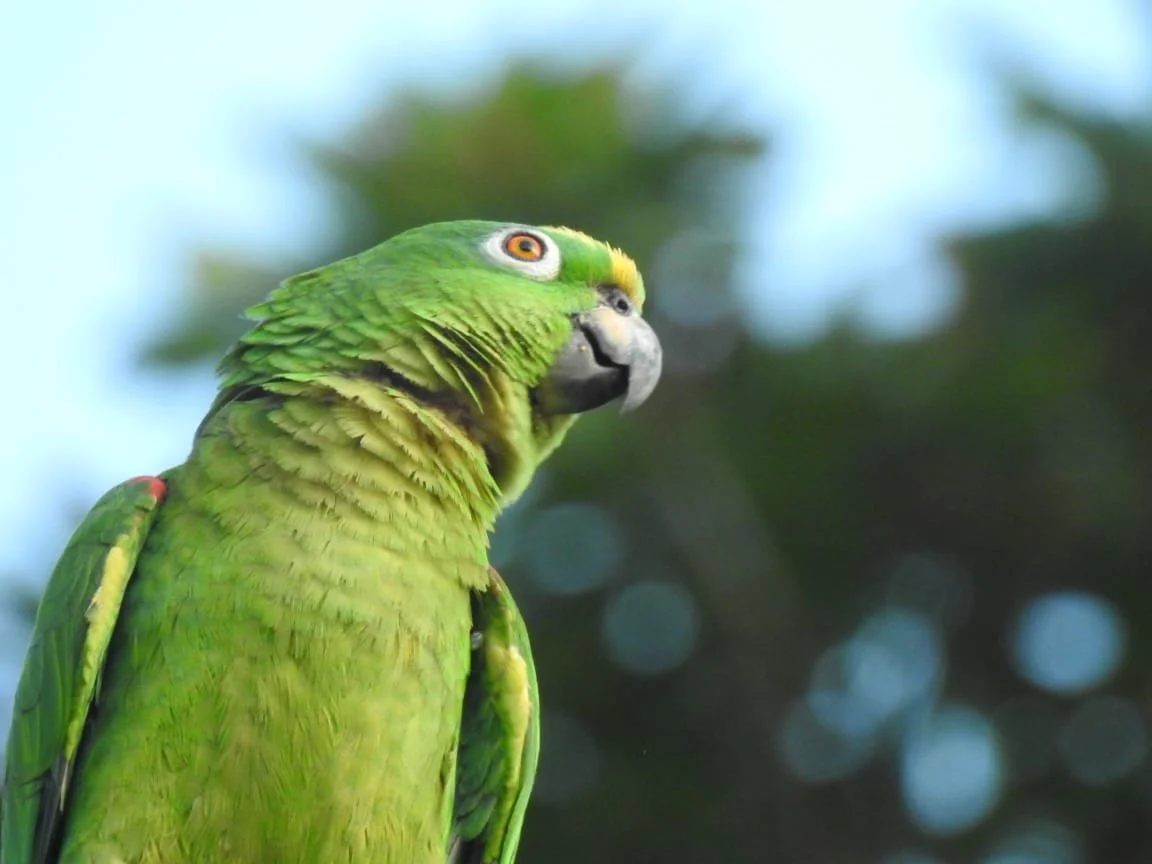
More than 50 species of parrots found in the Peruvian Amazon, including the yellow-crowned Amazon . The yellow-crowned Amazon is a medium sized parrot known for their bright green feathers that have blue tips with red patched wings on them. They have white eye rings and a yellow crown on their head.
Native to the tropical regions of Central and South America. They are found in Panama, Colombia , Venezuela, Brazil, Ecuador, Bolivia and Peru! Yellow-crowned parrots inhabit tropical forests , woodlands, mangroves, savannas and agricultural areas. They are secondary cavity nesters, utilizing hollow trees.
While known for their intelligence, Yellow-crowned parrots are also very active and social birds. They usually live in pairs or small groups. However, at times gather in large flocks in feeding areas. They communicate with loud calls and screeches, and have an amazing ability to mimmic human speech and other sounds.
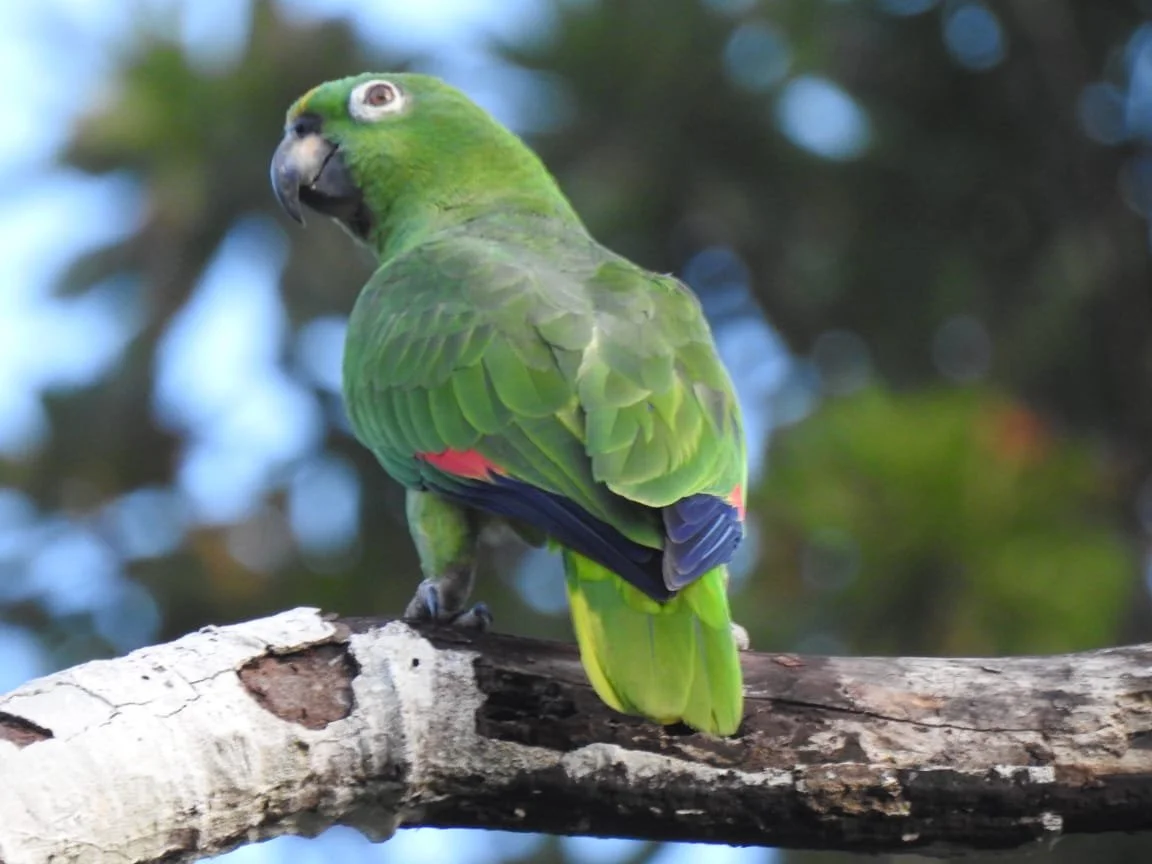
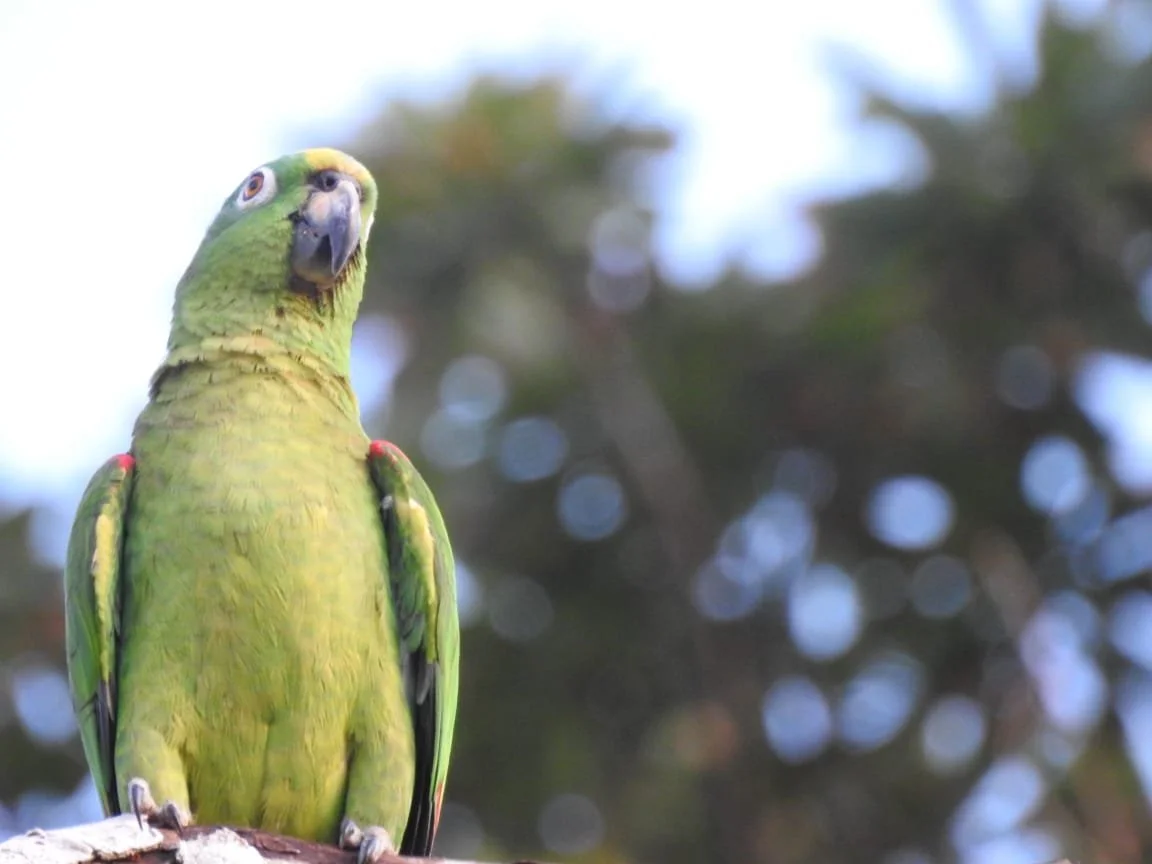
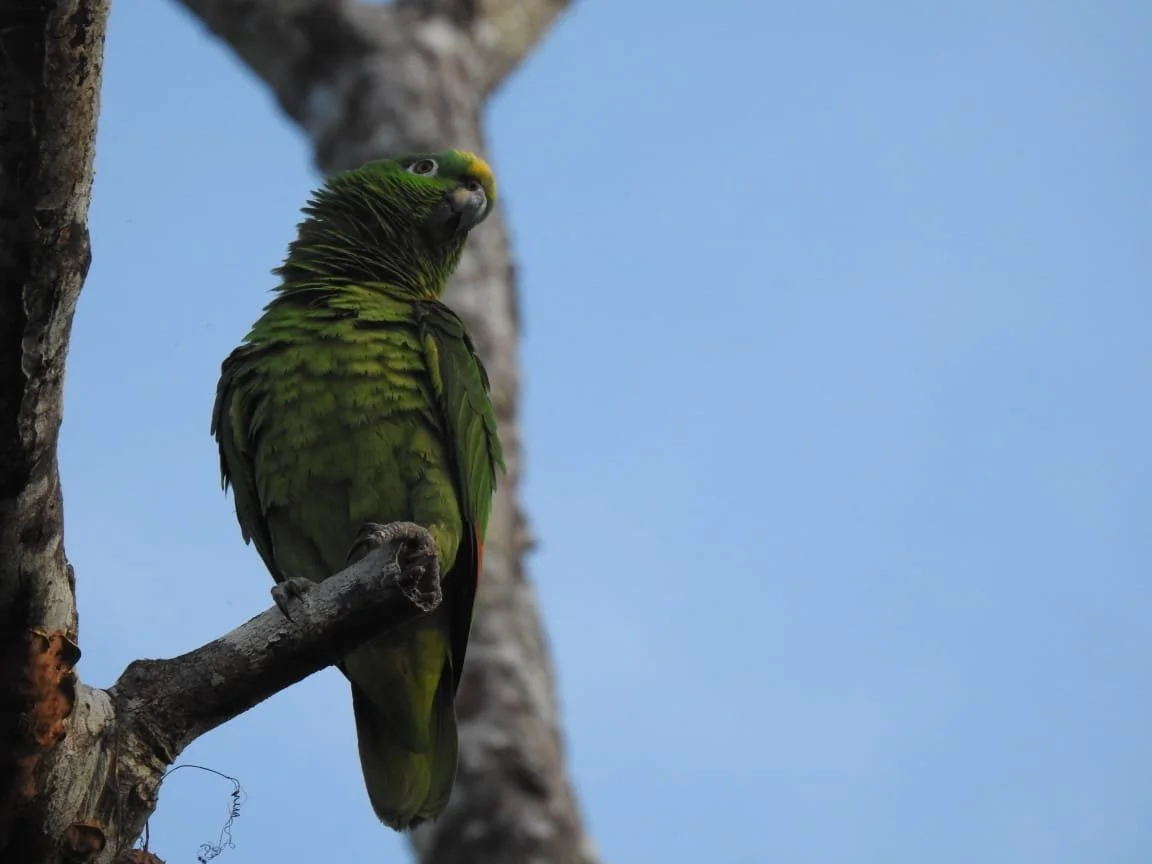
These tropical birds are diurnal, meaning they exhibit high-energy , as well as, social activity during the day. They are extremely strong fliers, flying at high altitudes to cover long distances efficiently between foraging areas and roosts, using rapid, shallow wing beats to maintain speed and utilizing jetstreams to minimize effort. Flying high also keeps them out of range of many potentially predators like Boa constrictors, Large birds of prey, and nest predators like monkeys and toucans. As well as Intense, illegal pet trapping for pet trade , especially in Mexico and Peru, being the major cause of population decline.
Yellow-crowned Amazons are omnivores and are often seen foraging in flocks in the canopy . Consuming things like fruits, nuts, seeds, berries, blossoms and leaf buds. They are also known to feed on palm fruits, acacia, occasionally supplementing their diets for salt like and clay for nutrients. They climb from branch to branch for every bite, opposed to flying, and often gather in large communal feeding areas appearing loud , boisterous and playful.
At night, the parrots gather in large communal roosts of up to 30 or more birds and remain quiet and inactive. They engage in what is known as slow wave sleep, where they keep one eye open to partially stay alert. They also sleep on one leg, with the other tucked under their feathers and their heads tucked under a wing to blend into the canopy, generally sleeping from sunset to dawn.
Wildlife Weekly with Lisa Brown 1/3/26
Manaus slender-legged tree frog
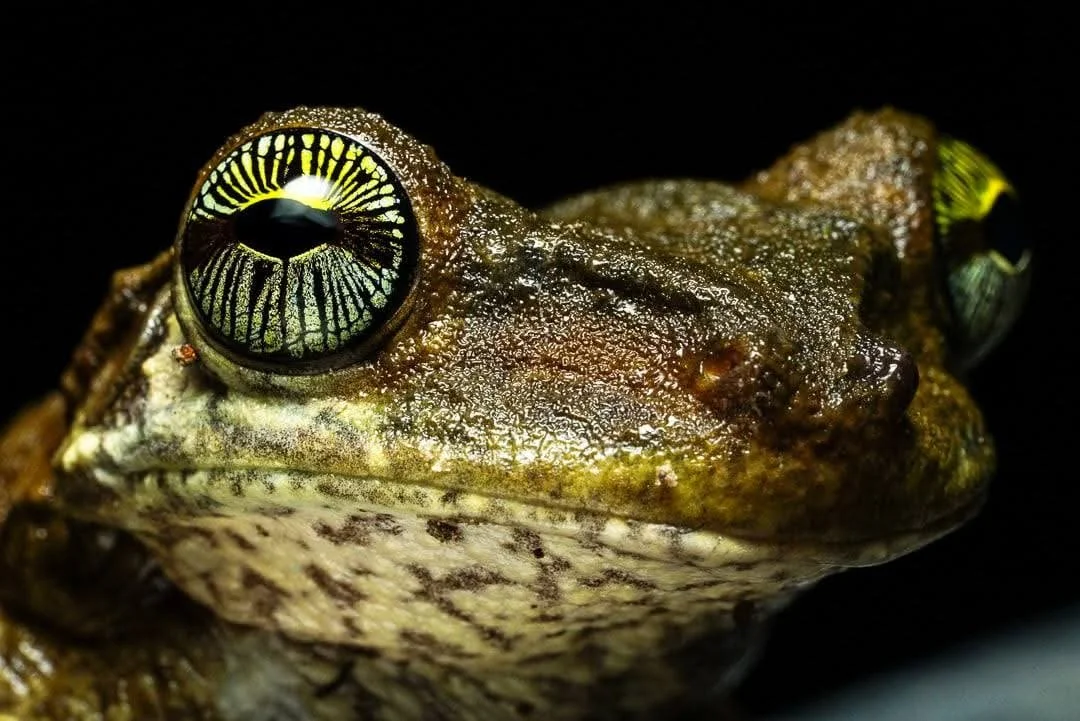
Peru is incredibly rich in frogs, with over 600 amphibian species, including hundreds of tree frog specie, like the Manaus slender-legged tree frog! A striking tree frog known for its wide head and snout-vent length , long legs and its ability to grow over 4 inches long. Males and females are a light brown to dark brown color with males having warty skin and females smooth skin. They possess long limbs with dark brown stripes and striking golden irises with black reticulations. Their physical traits help them to blend in with the rainforest canopy and understory.
The Manaus slender-legged tree frog is arboreal, occupying a variety of wet tropical habitats including moist lowland forests, rivers, marshes and canals. They are found across the Amazon Basin and surrounding regions in South America. Although Manaus slender-legged tree frogs are generally solitary, these habitats are crucial for breeding and feeding.
Like most frogs, they aren’t familial and prefer to live alone, only interacting for specific purposes like mating or finding food. They are nocturnal, spending most of their time hiding in the trees, calling from the ground or hidden leaf litter. Males sing from low vegetation or near water to attract females, with louder calls indicating a larger, more desirable mates. The male and female will then perform external fertilization, clasping firmly around the female while she releases eggs.
The Manaus slender-legged tree frog then create a unique, secret nest. Females secrete a fluid that males froth into a foam, encasing the eggs for protection. These foam nests are often buried under leaves and roots, making them extremely hard to find. The subterranean foam nests are a key feature to hiding the young from predators and drought but can create a food challenge.
The female returns to the water source to lay extra eggs specifically as food for her tadpoles. After hatching, tadpoles emerge from the nest and drop into nearby water to complete their metamorphosis. The first tadpoles to hatch exhibit a fascinating specialized behavior called omophagous nature. This is when they eat clutches of unfertilized eggs, which is crucial for survival in plant-held water where food is slim and scarce. When food is available, they become active swimmers and eaters in the wild and their diet shifts. Adult Manaus slender-legged tree fros will use excellent vision and quick reflexes to snatch up insects, arachnids and other invertebrates with their sticky tongues or forelimbs, relying on camouflage and stillness during the day to avoid predators. Predators include various snakes, large spiders, birds and insects, highlighting its vulnerability across different layers of the forest ecosystem.
Manaus slender-legged tree frog
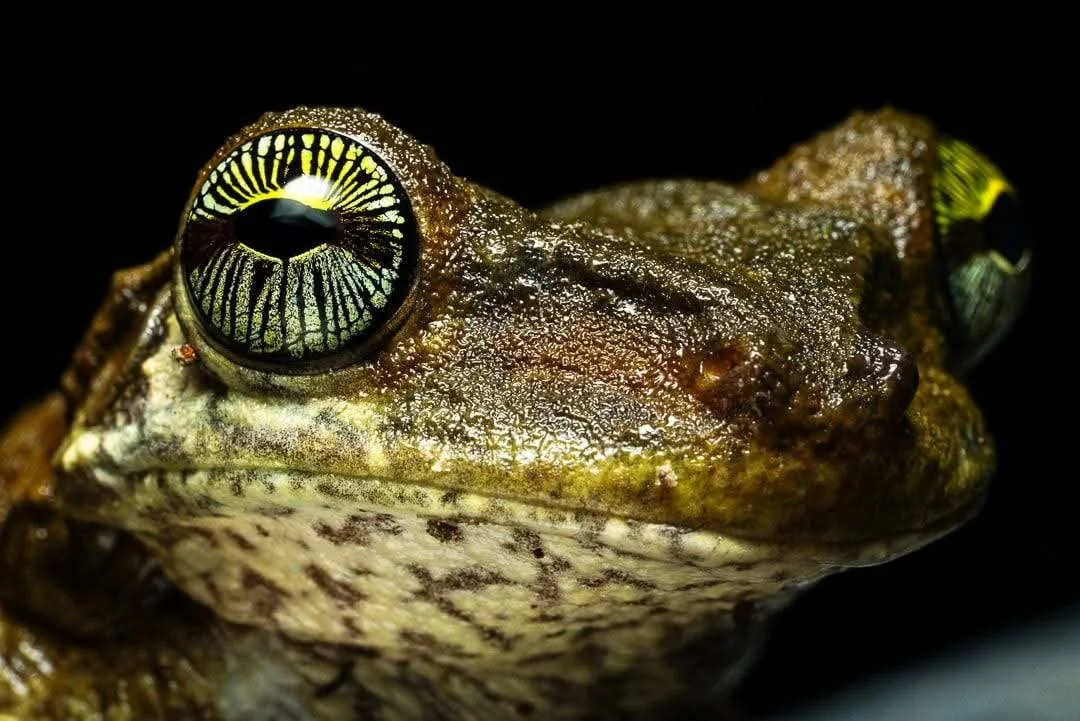
Peru is incredibly rich in frogs, with over 600 amphibian species, including hundreds of tree frog specie, like the Manaus slender-legged tree frog! A striking tree frog known for its wide head and snout-vent length , long legs and its ability to grow over 4 inches long. Males and females are a light brown to dark brown color with males having warty skin and females smooth skin. They possess long limbs with dark brown stripes and striking golden irises with black reticulations. Their physical traits help them to blend in with the rainforest canopy and understory.
The Manaus slender-legged tree frog is arboreal, occupying a variety of wet tropical habitats including moist lowland forests, rivers, marshes and canals. They are found across the Amazon Basin and surrounding regions in South America. Although Manaus slender-legged tree frogs are generally solitary, these habitats are crucial for breeding and feeding.
Like most frogs, they aren’t familial and prefer to live alone, only interacting for specific purposes like mating or finding food. They are nocturnal, spending most of their time hiding in the trees, calling from the ground or hidden leaf litter. Males sing from low vegetation or near water to attract females, with louder calls indicating a larger, more desirable mates. The male and female will then perform external fertilization, clasping firmly around the female while she releases eggs.
The Manaus slender-legged tree frog then create a unique, secret nest. Females secrete a fluid that males froth into a foam, encasing the eggs for protection. These foam nests are often buried under leaves and roots, making them extremely hard to find. The subterranean foam nests are a key feature to hiding the young from predators and drought but can create a food challenge.
The female returns to the water source to lay extra eggs specifically as food for her tadpoles. After hatching, tadpoles emerge from the nest and drop into nearby water to complete their metamorphosis. The first tadpoles to hatch exhibit a fascinating specialized behavior called omophagous nature. This is when they eat clutches of unfertilized eggs, which is crucial for survival in plant-held water where food is slim and scarce. When food is available, they become active swimmers and eaters in the wild and their diet shifts. Adult Manaus slender-legged tree fros will use excellent vision and quick reflexes to snatch up insects, arachnids and other invertebrates with their sticky tongues or forelimbs, relying on camouflage and stillness during the day to avoid predators. Predators include various snakes, large spiders, birds and insects, highlighting its vulnerability across different layers of the forest ecosystem.
Wildlife Weekly with Lisa Brown
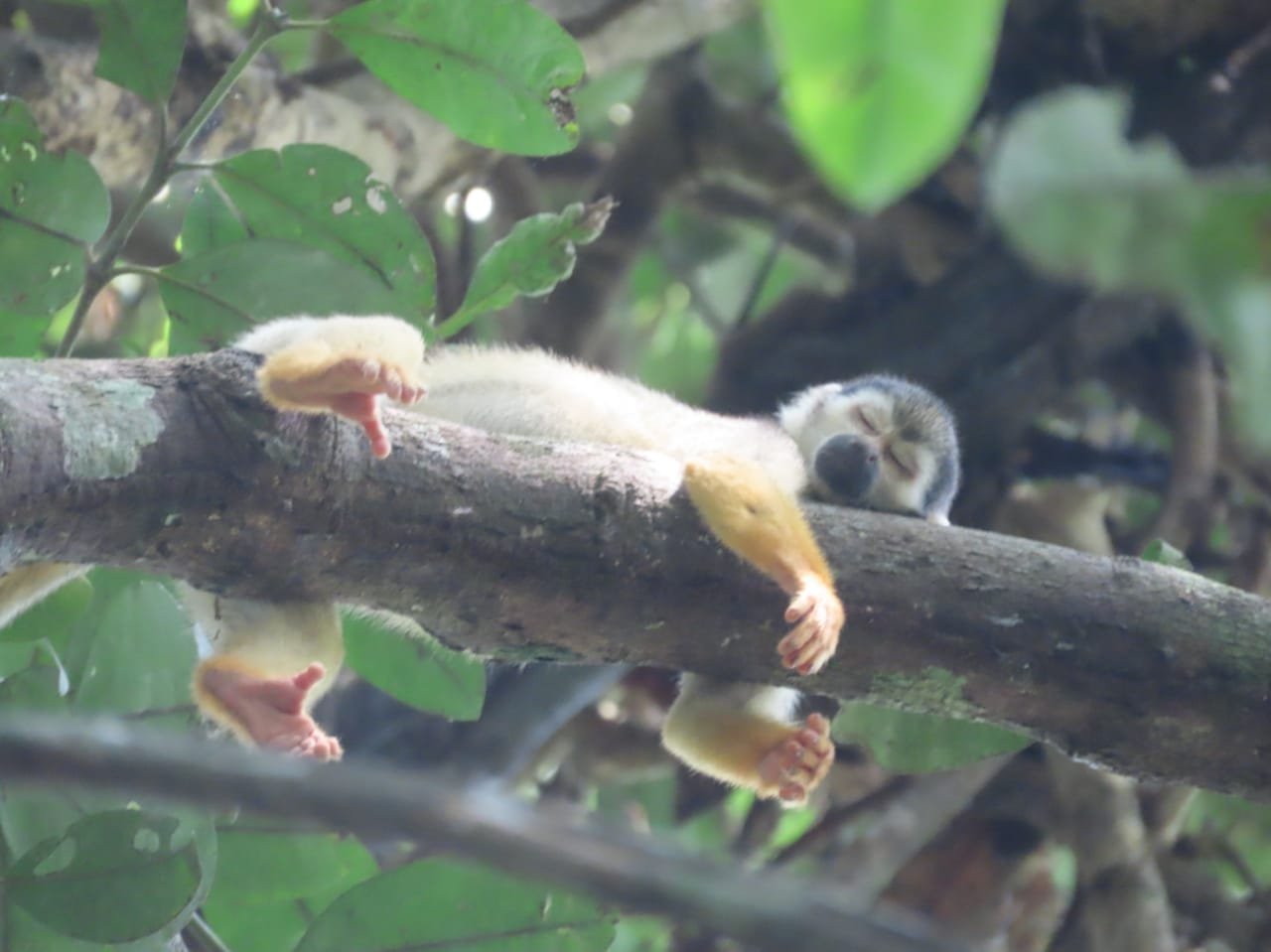
Peru is home to several species of squirrel monkey, including the Common Squirrel Monkey and the Black-capped Squirrel Monkey. Squirrel monkeys are small, highly social primates known for their agility, intelligence and distinctive facial markings, being the most recognizable primates in the Amazon region. They have a body length of just 10-14 inches, as well as, an astounding weight of 1-2 pounds and a thick, bushy tail , used for balance, that makes up more than half of their length. Their face is white with black around the mouth and eyes , giving a “mask-like” appearance. An intriguing addition to their very expressive facial expressions. Common Squirrel monkeys can be a light olive with grey backs , orange limbs and white underparts opposed to Black-capped Squirrel Monkeys have a dark patch of fur on their heads.
Found in the lowland rainforests of Peru, as well as parts of Brazil and Bolivia, near border regions. Squirrel monkeys prefer tropical evergreen forests, riverine forests, and secondary growth areas, referring to regrowth after disturbances. Squirrel monkeys are highly adaptable and thrive in these growth areas . These are areas of forest that have regenerated after events such as logging, human settlement, or natural disturbances like hurricanes. They are abundant in food sources , and have dense vegetation that provide cover from aerial predators.
Squirrel monkeys are extremely social and live in large groups ranging from 20 to over 100 individuals, even more during mating season. They have complex communication using calls and scent (urine washing) and form subgroups by age, or sex outside of mating season. Males form dominance hierarchies, opposed to females who generally lack strict hierarchies, though stress and resource competition can cause tension. Squirrel monkeys don’t rely heavily on grooming for bonding , they rely on proximity and calls for social bonds. The groups generally are territorial and avoid each other, however they may join temporarily for food.
These omnivores creatures feed on sweet treats like fruits , berries, figs, bananas and wild cashews. They enjoy tender leaves, buds and nectars. However , a crucial part of their diet includes caterpillars, grasshoppers, spiders and insect larvae. Insects and small invertebrates provide essential concentrated protein, fats and micronutrients that fruits often lack. When fruit is scarce, it can sometimes make up 80% of their diet and is vital for energy and growth.
Squirrel monkeys are vital to tropical ecosystems. They are seed dispersers, spreading plant life through their fruit-heavy diets, as well as, insect controllers who regulate arthropod populations. They are also a crucial food source for larger predators like raptor, big cats and snakes, playing a role in the food chain.
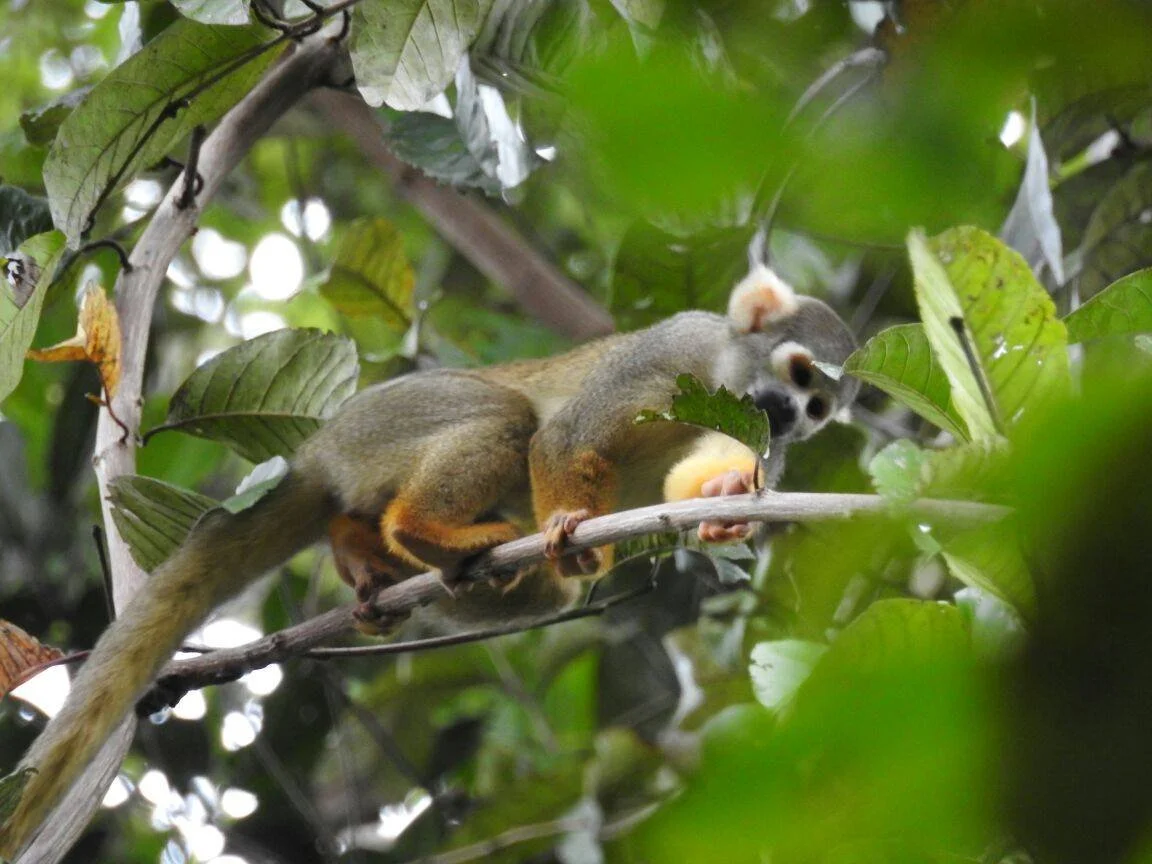
Peru is home to several species of squirrel monkey, including the Common Squirrel Monkey and the Black-capped Squirrel Monkey. Squirrel monkeys are small, highly social primates known for their agility, intelligence and distinctive facial markings, being the most recognizable primates in the Amazon region. They have a body length of just 10-14 inches, as well as, an astounding weight of 1-2 pounds and a thick, bushy tail , used for balance, that makes up more than half of their length. Their face is white with black around the mouth and eyes , giving a “mask-like” appearance. An intriguing addition to their very expressive facial expressions. Common Squirrel monkeys can be a light olive with grey backs , orange limbs and white underparts opposed to Black-capped Squirrel Monkeys have a dark patch of fur on their heads.
Found in the lowland rainforests of Peru, as well as parts of Brazil and Bolivia, near border regions. Squirrel monkeys prefer tropical evergreen forests, riverine forests, and secondary growth areas, referring to regrowth after disturbances. Squirrel monkeys are highly adaptable and thrive in these growth areas . These are areas of forest that have regenerated after events such as logging, human settlement, or natural disturbances like hurricanes. They are abundant in food sources , and have dense vegetation that provide cover from aerial predators.
Squirrel monkeys are extremely social and live in large groups ranging from 20 to over 100 individuals, even more during mating season. They have complex communication using calls and scent (urine washing) and form subgroups by age, or sex outside of mating season. Males form dominance hierarchies, opposed to females who generally lack strict hierarchies, though stress and resource competition can cause tension. Squirrel monkeys don’t rely heavily on grooming for bonding , they rely on proximity and calls for social bonds. The groups generally are territorial and avoid each other, however they may join temporarily for food.
These omnivores creatures feed on sweet treats like fruits , berries, figs, bananas and wild cashews. They enjoy tender leaves, buds and nectars. However , a crucial part of their diet includes caterpillars, grasshoppers, spiders and insect larvae. Insects and small invertebrates provide essential concentrated protein, fats and micronutrients that fruits often lack. When fruit is scarce, it can sometimes make up 80% of their diet and is vital for energy and growth.
Squirrel monkeys are vital to tropical ecosystems. They are seed dispersers, spreading plant life through their fruit-heavy diets, as well as, insect controllers who regulate arthropod populations. They are also a crucial food source for larger predators like raptor, big cats and snakes, playing a role in the food chain.
Wildlife Weekly 12.3.25
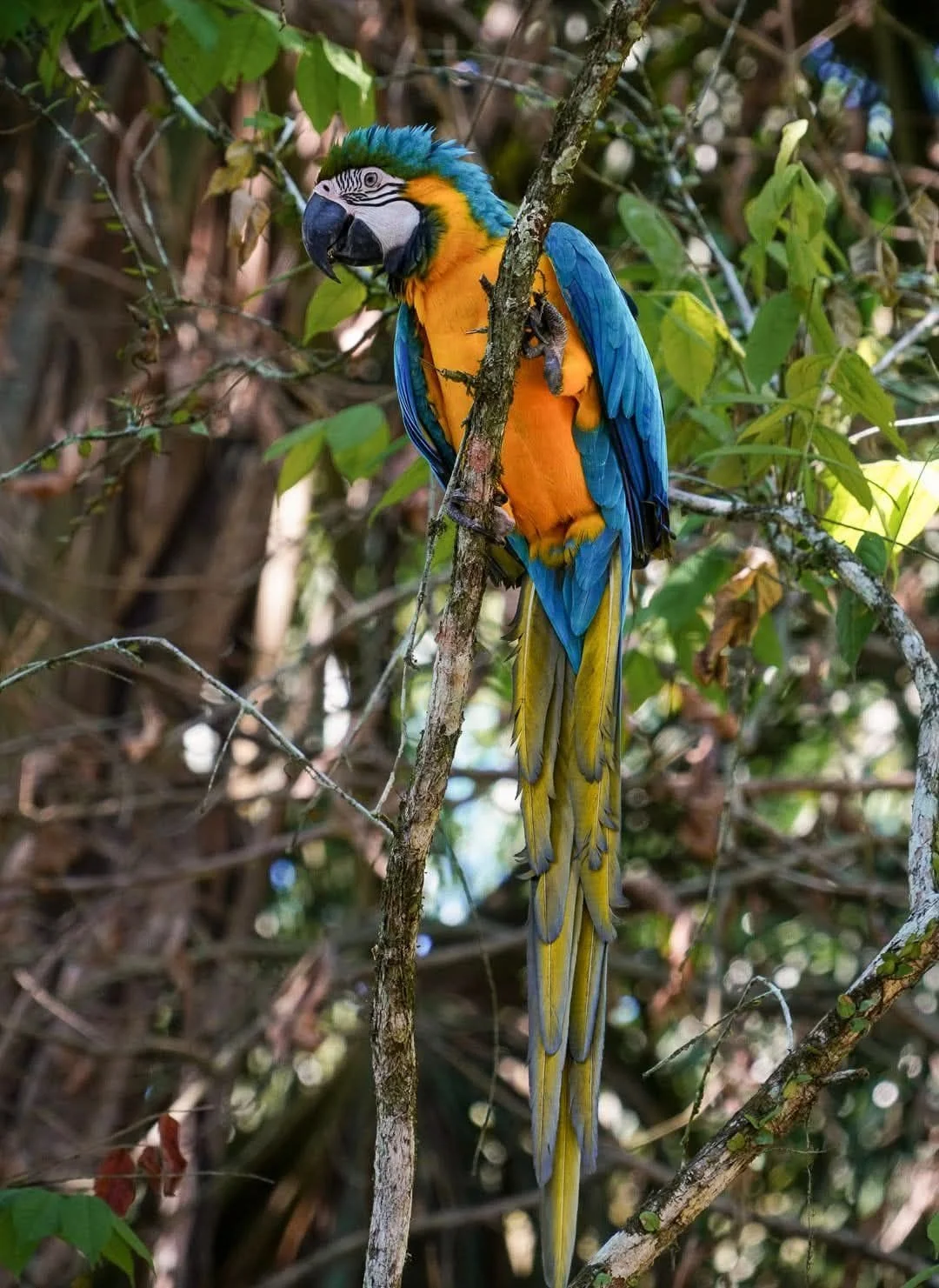
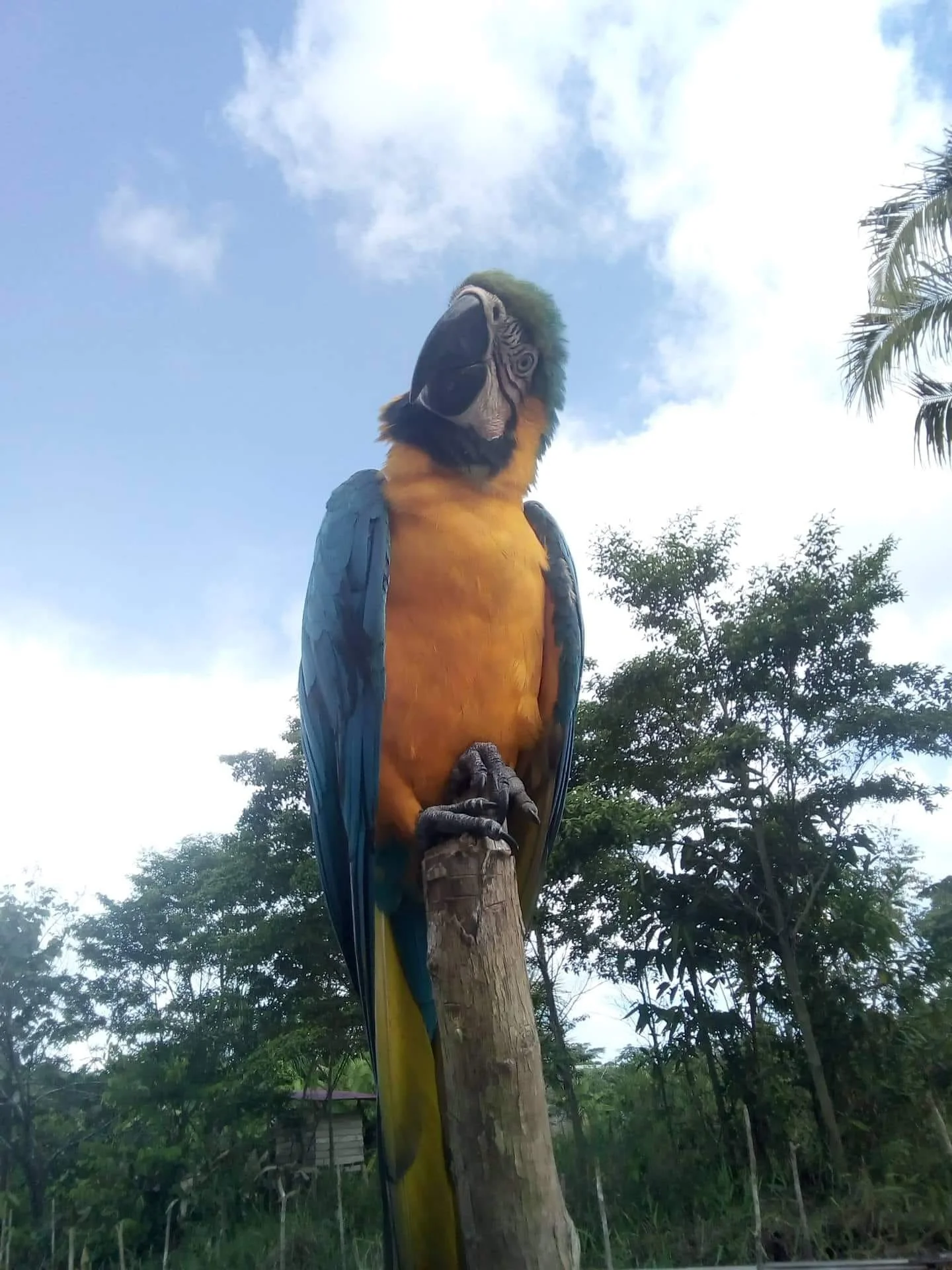
The Blue and Gold Macaw
The Blue and Gold Macaw
The blue-and-gold macaw is a large neotropical parrot, measuring around 36 inches in length and a wingspan of up to 4 ft! They possess a powerful, hooked black beak, used for crushing nuts and seeds, and are recognized by their brilliant blue backs, wings and tail. They have vibrant golden breasts, bellies and underwings , with bright white faces and flashes of black and bright green across their forehead and eyes.
The species is widely distributed throughout South and Central America. Countries include Bolivia, Brazil, Columbia, Ecuador, Peru,Venezuela and Panama. They primarily inhabit forests and savannahs and are frequently found in swampy tropical rainforests and woodlands and are able to reach flight speeds of up to 35 mph!
In the wild, macaws are gregarious and live in flocks. They form strong lifelong monogamous pair bonds. Pairs are often seen flying or sitting side-by-side, preening and vocalizing. They show affection by holding feet preening and in some cases regurgitating food for their mates.They thrive on companionship.
Blue and gold macaws are diurnal, social birds that spend their days flying between roosting sites and feeding grounds. Macaws are also known to be “messy eaters”, dropping a lot of food and dispersing seeds that promote forest growth. They are herbivores, using their strong beaks to crack open nuts, fruits seeds, leaves, bark and clay. Typically macaw nests are found in tree hollows or cavities, most commonly in upper parts of dead palm trees, however, macaws often flock to mountains of clay along riverbanks known as “macaw licks”. This is a vital part of their diet, as it provides necessary minerals and helps them digest toxins from unripe seeds.
Macaws are very vocal birds, using loud screams, squawks and squeaks to communicate. They are also extremely wary of potential dangers. At the slightest sign of danger, the birds will immediately take air. They use loud , high-pitched calls as an alarm to warn others. A flock may go completely silent for a moment before all taking flight at once. This sudden, noisy, and colorful escape can startle the predator. Predators include large raptor like harpy eagles, hawk eagles, and orange-breasted falcons which attack them in flight. In addition to these, various predators like snakes , monkeys and large cats can also prey on the young while still in the nests.
Wildlife Weekly 12/1/25
Amazonian Manatee
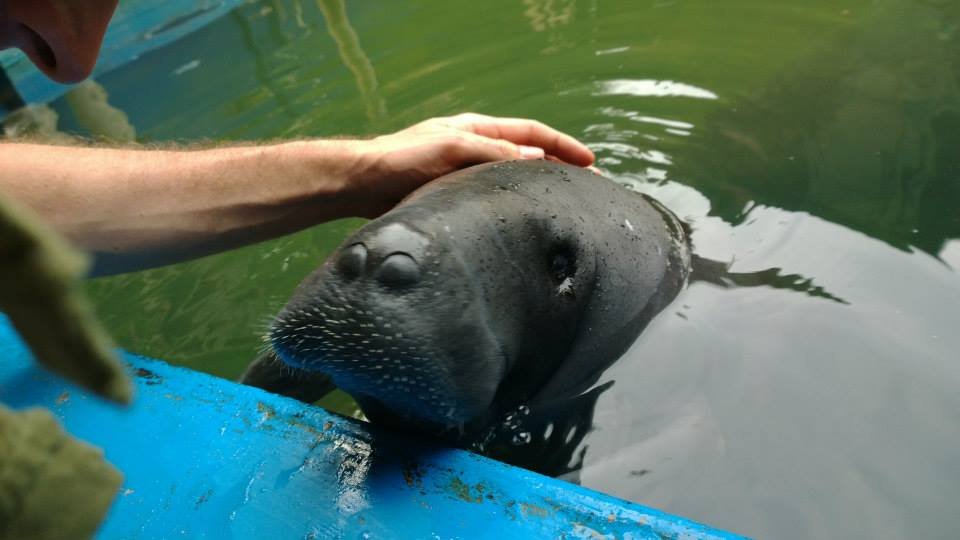
Amazonian manatees are gray , streamlined aquatic animals distinguish by white or pink spots on their chests. Although these large large creatures can reach up to 3 meters in length and weigh around 992 pounds, they are harmless and and among the smallest of all the manatee species. They have a large flexible upper lip with thick bristles to help them gather food and a square shaped snout with nostrils that open and close when submerged. To help gain speed they use a large, flat paddle shaped tail to help propel them through the water. Interestingly, Amazonian manatees have two forelimbs that have evolved into flippers, however , they were born without nails on these flippers, unlike other manatee species.
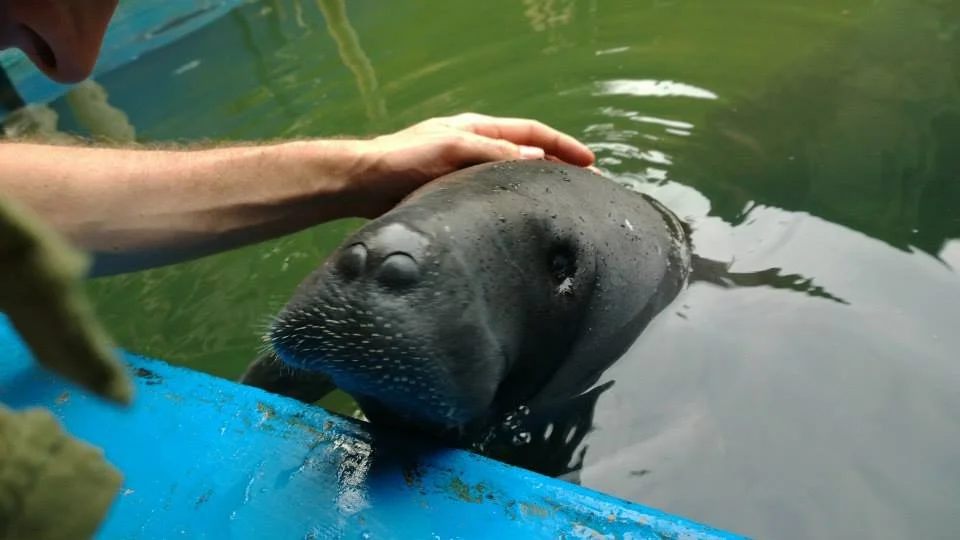
Flippers act like paddles to help manatees steer through the freshwater environments throughout the Amazon River Basin. They also help with stabilizing and “walking” along the bottom. Amazonian manatee specific habitat preferences change with the seasons. During the wet season, they move into flooded forests and backwaters. However, during dry season they return to deeper rivers and permanent lakes to survive on stored fat reserves. They are the only species found exclusively in freshwater environments.
Manatees spend their days grazing, resting and slowly traveling through the water. With the help of their trunk-like, flexible upper lip and adapted straight snout that allows them to feed easier at the surface, amazonian manatees spend 6-8 hours grazing on emergent aquatic vegetation such as grasses , water hyacinths and water lettuce. They also eat floating fruits and seeds. The vegetation is then sent on a week-long journey through their digestive system.
These unique aquatic animals can eat up to 10% of their body weight in food each day. By consuming large amounts of vegetation, they play a vital role in keeping the Amazonian waterways healthy by controlling plant growth. They store energy as fat. During periods of low water, when the season changes, they may be restricted to deeper water and can survive for extended periods by fasting and relying on fat reserves. They are the only aquatic mammals in the Amazon that are exclusively herbivorous! As for the remainder of the day, manatees devote up to 12 hrs a day too resting, often submerged. Manatees must surface to breathe, doing so every few minutes when active and every 20 minutes when resting.
While they are generally solitary, they are also described as semi-social. Sometimes being spotted in small groups of 4-8 individuals for mating or other interactions. However, they are slow to reproduce , typically giving birth to a single calf only once every two years after a gestation period of 12 months.
Interestingly enough, manatees have few significant natural predators due to their size, Including jaguars , crocodiles and sharks, however humans pose the most threat due to hunting for meat and fat. Other threats include habitat loss and boat collisions.
Wildlife Weekly
Spider Monkey
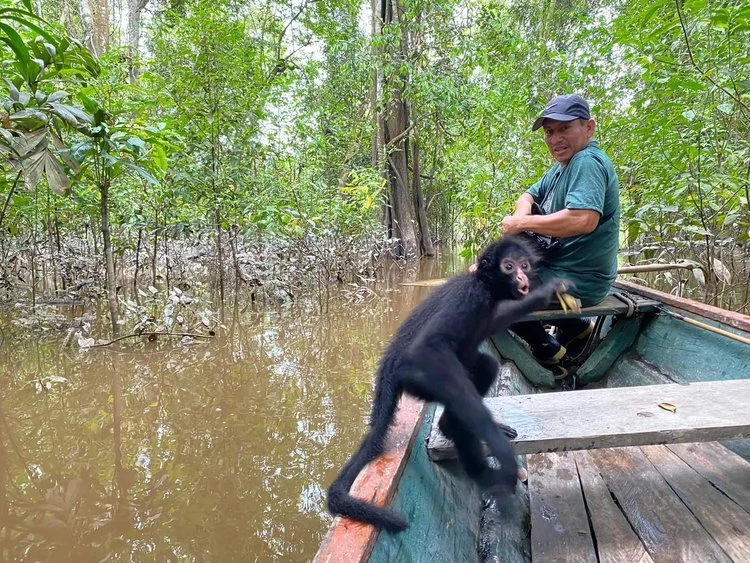
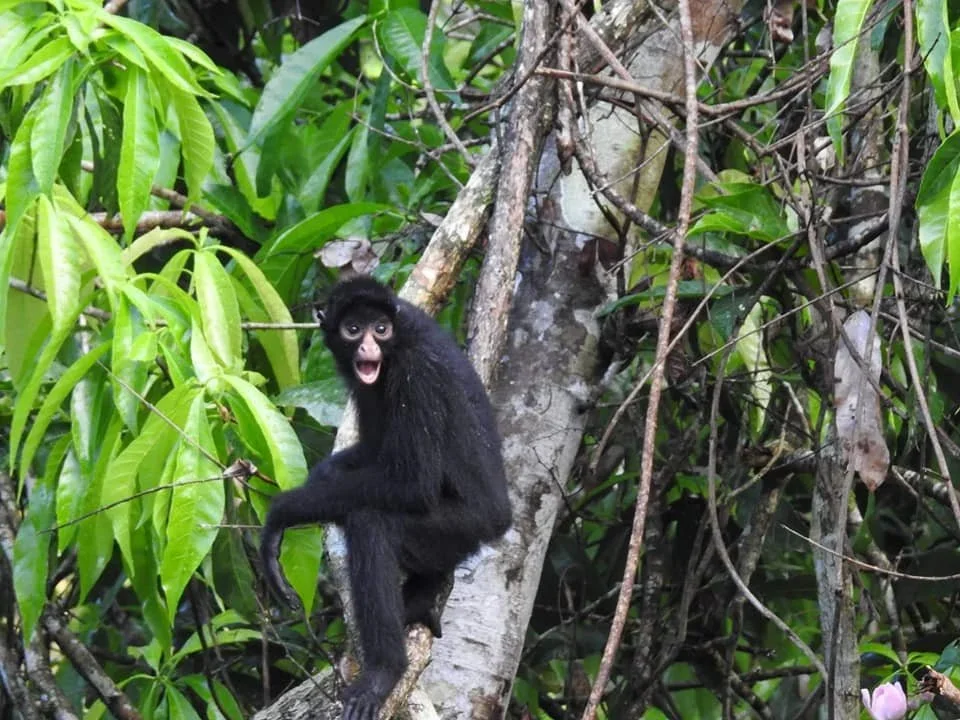
The Spider monkey is a new world monkeys, meaning it has very little to no thumbs, despite old world monkeys having opposable thumbs. They also spend their time in the trees opposed to old work monkeys that spend most of their time on the ground.They can have fur that is golden, red, brown or black ,although their hands are typically black. Their faces are usually hairless, but some species have flesh-colored rings around their eyes. Spider monkeys are only about 14-26 inches in body length and can weigh anywhere 13 to 24 pounds. They have extremely long arms and legs, giving them a lanky appearance. Their hands are narrow with long , curved fingers and reduce or non existent thumbs. Their tails are exceptionally long and can be used to grasp objects and swing from branches . They have a special friction pad at the tip of their tails that helps with grip. Spider monkeys are highly adapted to arboreal life, meaning they spend majority of the times swinging through the high canopy of the trees.
Spider monkeys are found in vast areas of the Americas, including Mexico, Guatemala, Honduras,Belize, El Salvador, Coast Rica, Panama, Columbia, Ecuador, Peru, Brazil and Bolivia. They thrive in mature, pristine tropical rainforests, but can also adapt to less pristine environments. For example, cloud forest, tall evergreen forests and lowland tropical forests.
Spider monkeys are diurnal, meaning they are active during the day. They spend their time high up in the limbs of the rainforest canopy, foraging, feeding and traveling. Spider monkeys are social animals. They exhibit fission-fusion, meaning they live in large groups ,called troops , that break off into smaller foraging parties during the day and then merge back together in the evening. They communicate with various vocalizations , gestures and facial expressions. They are known for their loud calls , screeches and barks , which they use to communicate with each other and warn of threats. While grooming is a common primate social behavior, spider monkeys do not frequently groom each other due to their lack of thumbs, which makes grooming difficult.
Male spider monkeys have a hierarchy, and dominant males may be more prone to aggression. While primarily friendly with their troop, the males can exhibit aggressive behaviors towards rivals , including screaming tossing feces and shaking branches. However , within the troop embraces are frequent, especially during fusions between subgroups and approaches to mothers of young infants. They use them as a a conflict management mechanism. Spider monkeys also engage in social play, with acrobatics, cuddling and rough and tumble play being common.
When the troop breaks off into two to forage, they search for a wide variety of things. Spider monkeys are primarily frugivores, meaning their diet consists mainly of ripe fruits, however they also eat leaves, nuts and seeds, as well as spiders and insects
Spider monkeys in the wild face threats from large cats like jaguars, pumas and ocelots. As well as large snakes and eagles. Spider monkeys are also susceptible to diseases like ,malaria carried by insects that are consumed in their habitat. Despite their agility and arboreal lifestyle, spider monkeys are facing increasing pressure from both natural predators and human activities , making them vulnerable to extinction.
Lisa Brown, RUJT

Is it safe to travel to the Amazon?
The New Normal
A lot of people are wondering when they can resume international travel after experiencing a global pandemic that has changed the travel industry . In this blog I will explore some of the things that have made it difficult to enjoy vacationing in a post pandemic world. PCR tests, mask mandates, cancelled flights are just a few of the new obstacles travelers face. Whether you are new to traveling abroad or a frequent flyer it is important to know what to expect when purchasing flights, booking trips, and investing your money before you leave home.
Flight Insurance
It is important to know the insurance policies of your flights when you are booking your vacation. Third party flight locators, while they may offer cheap flights, also may not offer any sort of refund for cancelled flights. Always check the refund policy of your airline in case of unexpected emergencies. In the event that you contract COVID 19 while travelling abroad your flight plans could change dramatically, especially given the rapidly changing boarding policies that are mandated by the Federal government.
Vaccinations
It is important to be vaccinated while travelling to limit the spread of disease and to protect yourself in the event that you contract a virus. Health resources are limited in the Amazon, which leaves the local communities incredibly vulnerable. The Amazon rainforest is an uncompromising ecosystem which is home to a plethora of beautiful botany, entomology and and wildlife but it serves as the home to several different viruses. The CDC recommends to be vaccinated for COVID 19, Hepatitis A & B, Malaria, Measles, Rabies, Typhoid, and Yellow Fever. While the rate of transmission of these viruses varies, it is better to be protected against the elements.
To be continued….