
Wildlife Weekly 12.3.25
The Blue and Gold Macaw
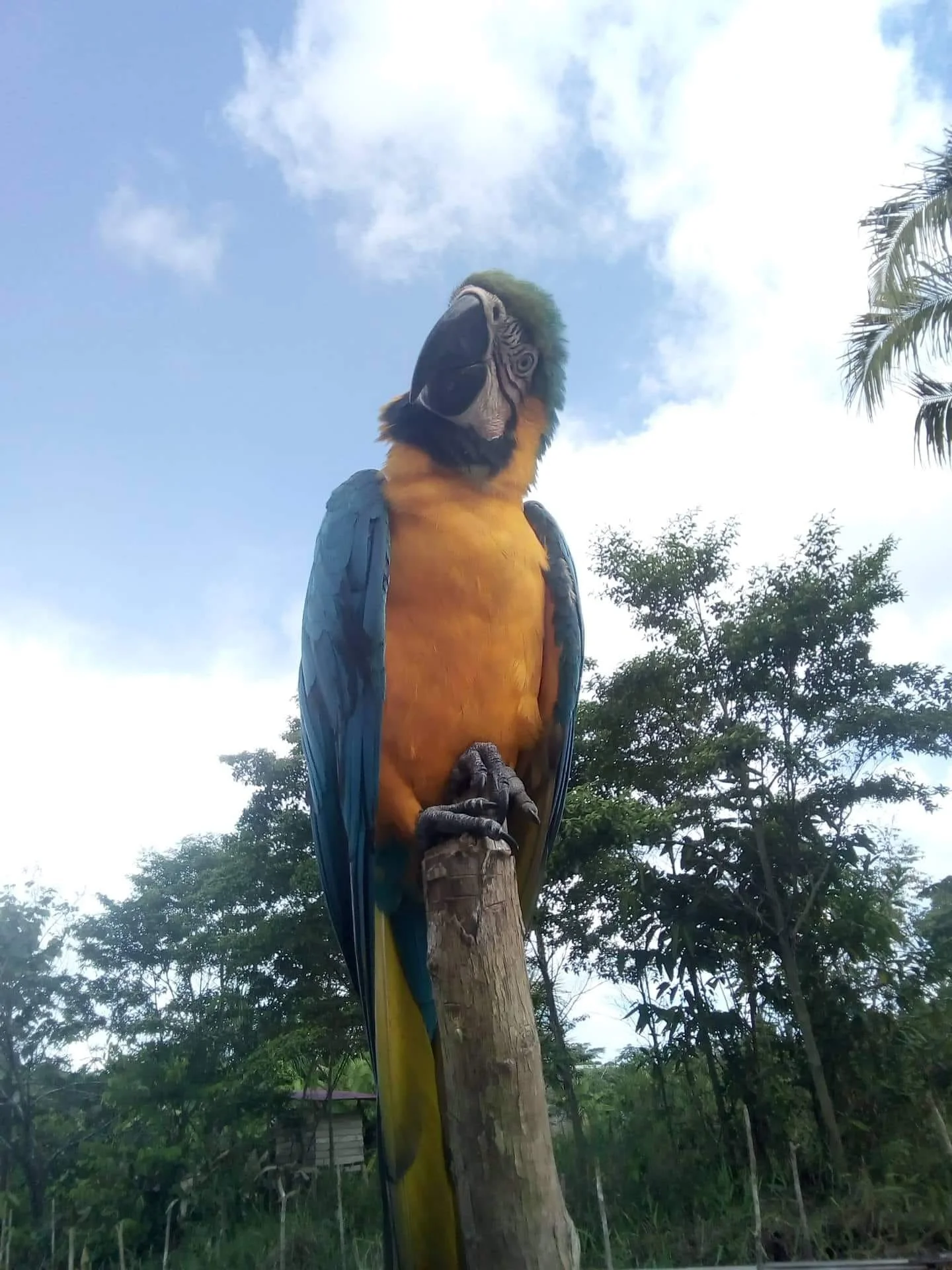
The Blue and Gold Macaw
The blue-and-gold macaw is a large neotropical parrot, measuring around 36 inches in length and a wingspan of up to 4 ft! They possess a powerful, hooked black beak, used for crushing nuts and seeds, and are recognized by their brilliant blue backs, wings and tail. They have vibrant golden breasts, bellies and underwings , with bright white faces and flashes of black and bright green across their forehead and eyes.
The species is widely distributed throughout South and Central America. Countries include Bolivia, Brazil, Columbia, Ecuador, Peru,Venezuela and Panama. They primarily inhabit forests and savannahs and are frequently found in swampy tropical rainforests and woodlands and are able to reach flight speeds of up to 35 mph!
In the wild, macaws are gregarious and live in flocks. They form strong lifelong monogamous pair bonds. Pairs are often seen flying or sitting side-by-side, preening and vocalizing. They show affection by holding feet preening and in some cases regurgitating food for their mates.They thrive on companionship.
Blue and gold macaws are diurnal, social birds that spend their days flying between roosting sites and feeding grounds. Macaws are also known to be “messy eaters”, dropping a lot of food and dispersing seeds that promote forest growth. They are herbivores, using their strong beaks to crack open nuts, fruits seeds, leaves, bark and clay. Typically macaw nests are found in tree hollows or cavities, most commonly in upper parts of dead palm trees, however, macaws often flock to mountains of clay along riverbanks known as “macaw licks”. This is a vital part of their diet, as it provides necessary minerals and helps them digest toxins from unripe seeds.
Macaws are very vocal birds, using loud screams, squawks and squeaks to communicate. They are also extremely wary of potential dangers. At the slightest sign of danger, the birds will immediately take air. They use loud , high-pitched calls as an alarm to warn others. A flock may go completely silent for a moment before all taking flight at once. This sudden, noisy, and colorful escape can startle the predator. Predators include large raptor like harpy eagles, hawk eagles, and orange-breasted falcons which attack them in flight. In addition to these, various predators like snakes , monkeys and large cats can also prey on the young while still in the nests.
