
Wildlife Weekly 12/1/25
Amazonian Manatee
Amazonian manatees are gray , streamlined aquatic animals distinguish by white or pink spots on their chests. Although these large large creatures can reach up to 3 meters in length and weigh around 992 pounds, they are harmless and and among the smallest of all the manatee species. They have a large flexible upper lip with thick bristles to help them gather food and a square shaped snout with nostrils that open and close when submerged. To help gain speed they use a large, flat paddle shaped tail to help propel them through the water. Interestingly, Amazonian manatees have two forelimbs that have evolved into flippers, however , they were born without nails on these flippers, unlike other manatee species.
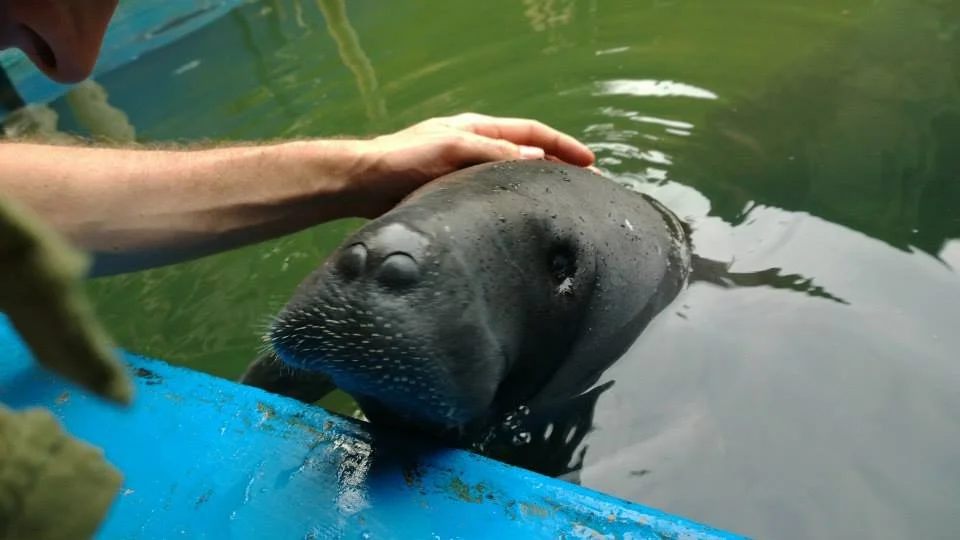
Flippers act like paddles to help manatees steer through the freshwater environments throughout the Amazon River Basin. They also help with stabilizing and “walking” along the bottom. Amazonian manatee specific habitat preferences change with the seasons. During the wet season, they move into flooded forests and backwaters. However, during dry season they return to deeper rivers and permanent lakes to survive on stored fat reserves. They are the only species found exclusively in freshwater environments.
Manatees spend their days grazing, resting and slowly traveling through the water. With the help of their trunk-like, flexible upper lip and adapted straight snout that allows them to feed easier at the surface, amazonian manatees spend 6-8 hours grazing on emergent aquatic vegetation such as grasses , water hyacinths and water lettuce. They also eat floating fruits and seeds. The vegetation is then sent on a week-long journey through their digestive system.
These unique aquatic animals can eat up to 10% of their body weight in food each day. By consuming large amounts of vegetation, they play a vital role in keeping the Amazonian waterways healthy by controlling plant growth. They store energy as fat. During periods of low water, when the season changes, they may be restricted to deeper water and can survive for extended periods by fasting and relying on fat reserves. They are the only aquatic mammals in the Amazon that are exclusively herbivorous! As for the remainder of the day, manatees devote up to 12 hrs a day too resting, often submerged. Manatees must surface to breathe, doing so every few minutes when active and every 20 minutes when resting.
While they are generally solitary, they are also described as semi-social. Sometimes being spotted in small groups of 4-8 individuals for mating or other interactions. However, they are slow to reproduce , typically giving birth to a single calf only once every two years after a gestation period of 12 months.
Interestingly enough, manatees have few significant natural predators due to their size, Including jaguars , crocodiles and sharks, however humans pose the most threat due to hunting for meat and fat. Other threats include habitat loss and boat collisions.
