
Wildlife Weekly with Lisa Brown
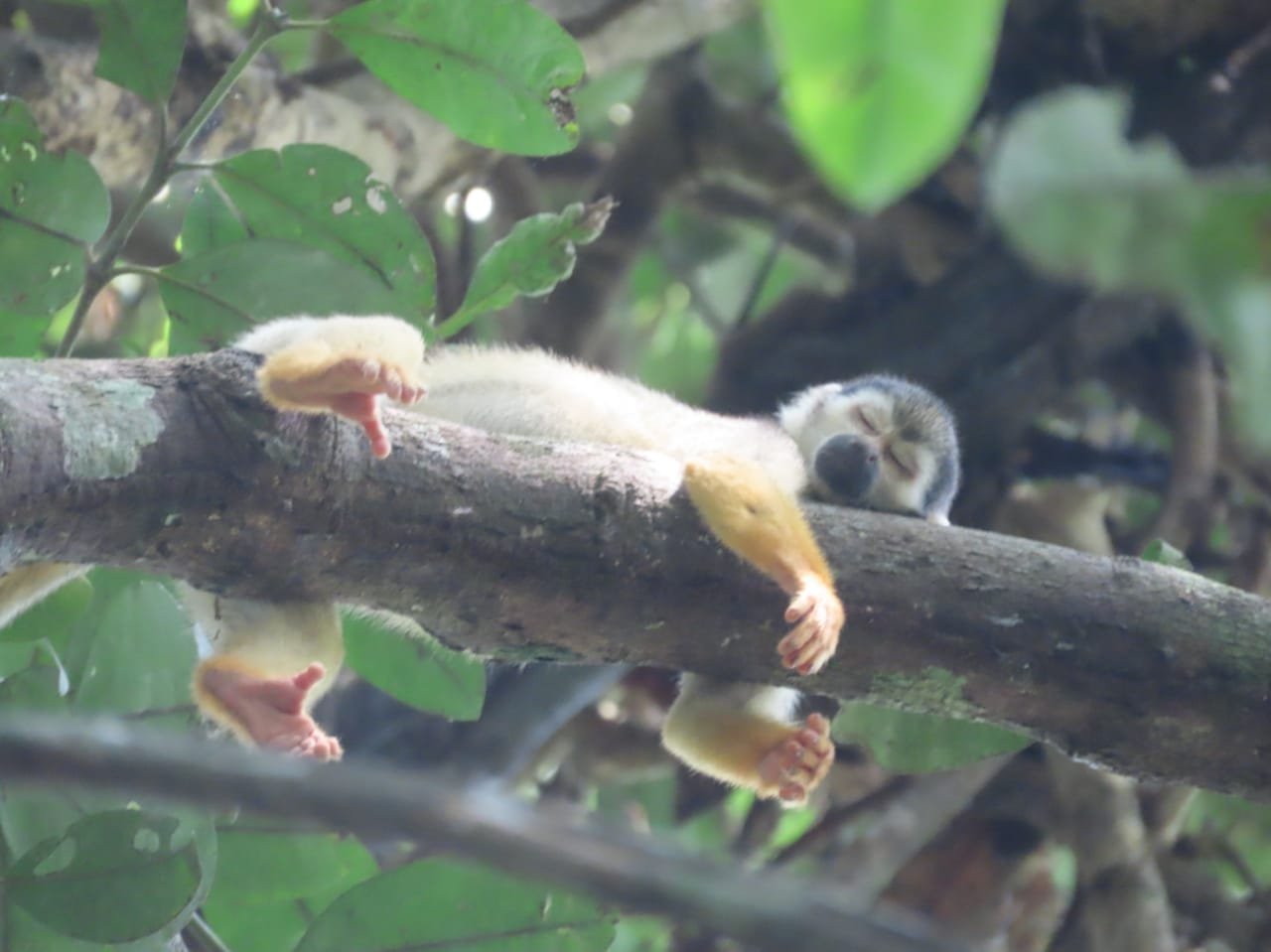
Peru is home to several species of squirrel monkey, including the Common Squirrel Monkey and the Black-capped Squirrel Monkey. Squirrel monkeys are small, highly social primates known for their agility, intelligence and distinctive facial markings, being the most recognizable primates in the Amazon region. They have a body length of just 10-14 inches, as well as, an astounding weight of 1-2 pounds and a thick, bushy tail , used for balance, that makes up more than half of their length. Their face is white with black around the mouth and eyes , giving a “mask-like” appearance. An intriguing addition to their very expressive facial expressions. Common Squirrel monkeys can be a light olive with grey backs , orange limbs and white underparts opposed to Black-capped Squirrel Monkeys have a dark patch of fur on their heads.
Found in the lowland rainforests of Peru, as well as parts of Brazil and Bolivia, near border regions. Squirrel monkeys prefer tropical evergreen forests, riverine forests, and secondary growth areas, referring to regrowth after disturbances. Squirrel monkeys are highly adaptable and thrive in these growth areas . These are areas of forest that have regenerated after events such as logging, human settlement, or natural disturbances like hurricanes. They are abundant in food sources , and have dense vegetation that provide cover from aerial predators.
Squirrel monkeys are extremely social and live in large groups ranging from 20 to over 100 individuals, even more during mating season. They have complex communication using calls and scent (urine washing) and form subgroups by age, or sex outside of mating season. Males form dominance hierarchies, opposed to females who generally lack strict hierarchies, though stress and resource competition can cause tension. Squirrel monkeys don’t rely heavily on grooming for bonding , they rely on proximity and calls for social bonds. The groups generally are territorial and avoid each other, however they may join temporarily for food.
These omnivores creatures feed on sweet treats like fruits , berries, figs, bananas and wild cashews. They enjoy tender leaves, buds and nectars. However , a crucial part of their diet includes caterpillars, grasshoppers, spiders and insect larvae. Insects and small invertebrates provide essential concentrated protein, fats and micronutrients that fruits often lack. When fruit is scarce, it can sometimes make up 80% of their diet and is vital for energy and growth.
Squirrel monkeys are vital to tropical ecosystems. They are seed dispersers, spreading plant life through their fruit-heavy diets, as well as, insect controllers who regulate arthropod populations. They are also a crucial food source for larger predators like raptor, big cats and snakes, playing a role in the food chain.
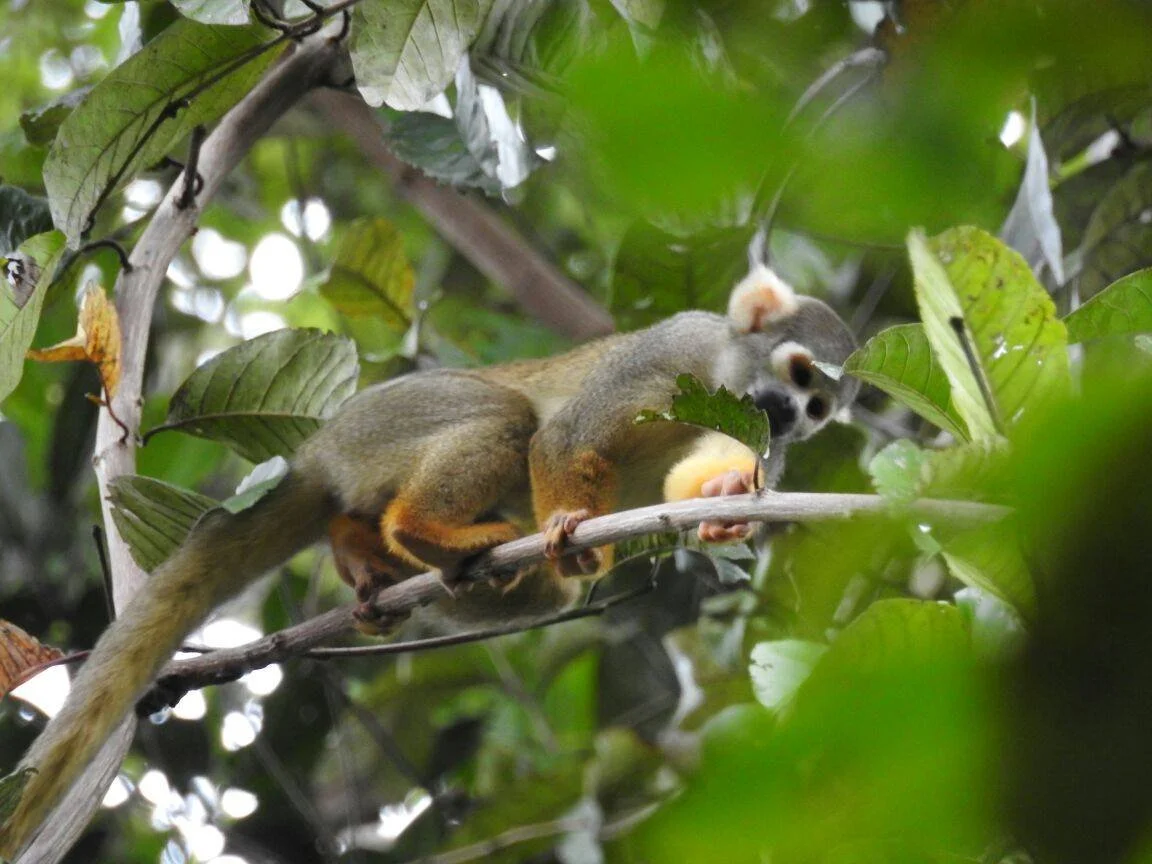
Peru is home to several species of squirrel monkey, including the Common Squirrel Monkey and the Black-capped Squirrel Monkey. Squirrel monkeys are small, highly social primates known for their agility, intelligence and distinctive facial markings, being the most recognizable primates in the Amazon region. They have a body length of just 10-14 inches, as well as, an astounding weight of 1-2 pounds and a thick, bushy tail , used for balance, that makes up more than half of their length. Their face is white with black around the mouth and eyes , giving a “mask-like” appearance. An intriguing addition to their very expressive facial expressions. Common Squirrel monkeys can be a light olive with grey backs , orange limbs and white underparts opposed to Black-capped Squirrel Monkeys have a dark patch of fur on their heads.
Found in the lowland rainforests of Peru, as well as parts of Brazil and Bolivia, near border regions. Squirrel monkeys prefer tropical evergreen forests, riverine forests, and secondary growth areas, referring to regrowth after disturbances. Squirrel monkeys are highly adaptable and thrive in these growth areas . These are areas of forest that have regenerated after events such as logging, human settlement, or natural disturbances like hurricanes. They are abundant in food sources , and have dense vegetation that provide cover from aerial predators.
Squirrel monkeys are extremely social and live in large groups ranging from 20 to over 100 individuals, even more during mating season. They have complex communication using calls and scent (urine washing) and form subgroups by age, or sex outside of mating season. Males form dominance hierarchies, opposed to females who generally lack strict hierarchies, though stress and resource competition can cause tension. Squirrel monkeys don’t rely heavily on grooming for bonding , they rely on proximity and calls for social bonds. The groups generally are territorial and avoid each other, however they may join temporarily for food.
These omnivores creatures feed on sweet treats like fruits , berries, figs, bananas and wild cashews. They enjoy tender leaves, buds and nectars. However , a crucial part of their diet includes caterpillars, grasshoppers, spiders and insect larvae. Insects and small invertebrates provide essential concentrated protein, fats and micronutrients that fruits often lack. When fruit is scarce, it can sometimes make up 80% of their diet and is vital for energy and growth.
Squirrel monkeys are vital to tropical ecosystems. They are seed dispersers, spreading plant life through their fruit-heavy diets, as well as, insect controllers who regulate arthropod populations. They are also a crucial food source for larger predators like raptor, big cats and snakes, playing a role in the food chain.