
Wildlife Weekly with Lisa Brown 1/3/26
Manaus slender-legged tree frog
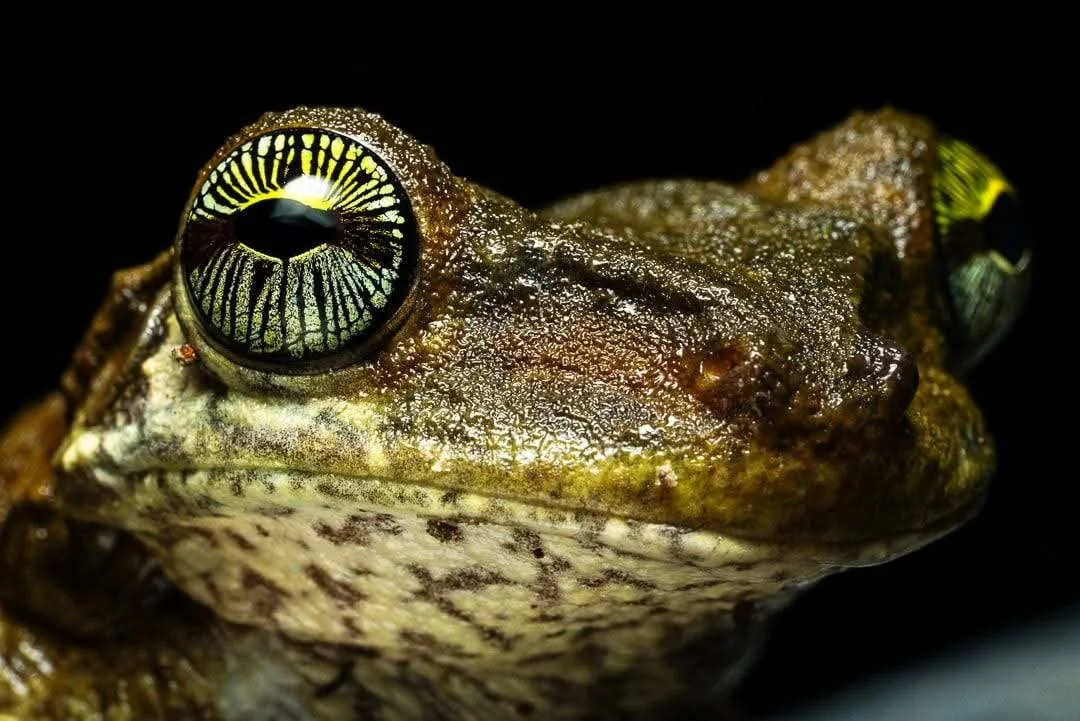
Peru is incredibly rich in frogs, with over 600 amphibian species, including hundreds of tree frog specie, like the Manaus slender-legged tree frog! A striking tree frog known for its wide head and snout-vent length , long legs and its ability to grow over 4 inches long. Males and females are a light brown to dark brown color with males having warty skin and females smooth skin. They possess long limbs with dark brown stripes and striking golden irises with black reticulations. Their physical traits help them to blend in with the rainforest canopy and understory.
The Manaus slender-legged tree frog is arboreal, occupying a variety of wet tropical habitats including moist lowland forests, rivers, marshes and canals. They are found across the Amazon Basin and surrounding regions in South America. Although Manaus slender-legged tree frogs are generally solitary, these habitats are crucial for breeding and feeding.
Like most frogs, they aren’t familial and prefer to live alone, only interacting for specific purposes like mating or finding food. They are nocturnal, spending most of their time hiding in the trees, calling from the ground or hidden leaf litter. Males sing from low vegetation or near water to attract females, with louder calls indicating a larger, more desirable mates. The male and female will then perform external fertilization, clasping firmly around the female while she releases eggs.
The Manaus slender-legged tree frog then create a unique, secret nest. Females secrete a fluid that males froth into a foam, encasing the eggs for protection. These foam nests are often buried under leaves and roots, making them extremely hard to find. The subterranean foam nests are a key feature to hiding the young from predators and drought but can create a food challenge.
The female returns to the water source to lay extra eggs specifically as food for her tadpoles. After hatching, tadpoles emerge from the nest and drop into nearby water to complete their metamorphosis. The first tadpoles to hatch exhibit a fascinating specialized behavior called omophagous nature. This is when they eat clutches of unfertilized eggs, which is crucial for survival in plant-held water where food is slim and scarce. When food is available, they become active swimmers and eaters in the wild and their diet shifts. Adult Manaus slender-legged tree fros will use excellent vision and quick reflexes to snatch up insects, arachnids and other invertebrates with their sticky tongues or forelimbs, relying on camouflage and stillness during the day to avoid predators. Predators include various snakes, large spiders, birds and insects, highlighting its vulnerability across different layers of the forest ecosystem.
